Search This Blog

Wednesday, April 10, 2013

Idiot Proof Diet - Day 3

More bacon and eggs for break fast. Salmon and FULL FAT cream cheese for lunch. This evening I am going out to a pub and will have to drink water. Will see how that goes. But I am resolved. Definitely no cheating allowed. As for eating it's a breeze will choose a steak with a cream sauce and a green salad

I have kept up the walking (only 15 minutes a day at the moment) I am walking in the evening as SocialWize is keeping me very busy.

Sneaked another look at the scales today. I know it's wrong but can't help myself. 1.9kgs down. I manage the water actually all the fat makes my mouth feel kaka so keep drinking water to get rid of the taste. Also having herb tea.

So far though feeling great. Could murder a glass of wine though.

Tuesday, April 9, 2013

Idiot Proof Diet - Day 2

Chose the salad  Nicoise for lunch which had a tin of tuna in oil, two eggs and a selection of allowed salad stuff, lashings of olive oil. I'd already had two eggs for breakfast so felt really weird. Drank lots of water and a cup of Rooibos tea.
Dinner was rib-eye pepper steak cooked in butter and double cream added to the butter and steak jus before serving. The side salad was avocado with a sour cream and blue cheese dressing. I kid you not.

This is the kind of food I have not eaten since the 70s and possibly in the early 80s.

I then went to meet a few people at Baron's in Woodmead and debated, seriously, about breaking the no drinking rule. And very bravely ordered a still mineral water.

I weighed myself this morning. Not meant to but I couldn't resist. I am down 1kg. Celebrating with more water.

Monday, April 8, 2013

The Idiot Proof Diet - Day 1

Strictly speaking, yesterday, my non-diet day is day one. The day I resolved to get on and do this thing. The book advises that the day before you start on the regime you have a blow out day. The suggestions were big slices of cake, hot chocolate before bed, piles of chips and slices of bread.  A last supper, if you like. And so with absolute freedom I went about shopping both for the coming week and for a Sunday dinner of anything I wanted.


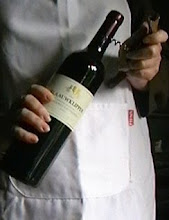
Blow Out Wine
Strangely I became a little unstuck at that. The wine choice was easy and chose my favourite Kleine Zalze Vineyard Selection Chenin Blanc (2011). But when it came to food choices there really wasn't that much I was lusting after. But in the end settled for Sweet Ginger Pork with Jasmine Rice Pot from Woolworths and a delicious baked cheesecake from Fournos.


I also had to buy a whole array of supplements including whey protein powder which cost R3 shy of R1000.


Day 1 Breakfast
Breakfast this morning was four rashers of bacon and two eggs fried in lashings of olive oil. I could have used butter too but was too lazy. Then the ritual of taking all the supplements for today and my normal  cocktail and washing it all down with at least 500ml of water.

For lunch I have a choice of pepper steak or salad Nicoise. Haven't decided yet.

I went for my wellness test a couple of weeks ago so at least we have something to measure against:
Blood Pressure 125/72
Cholesterol  5.63
Glucose 5.86
 
The diet is high protein (eggs again for lunch probably) and I will have to measure these all again in a month. Will be interesting to see whether there is a change. The authors decreased their cholesterol on the diet.


Sunday, April 7, 2013

The Idiot Proof Diet

So, knowing I have nothing to lose, I have decided to embark on Neris and India's Idiot Proof Diet. I have been on a funny diet ever since my hysterectomy in October 2011. The operation left me with symptoms similar to irritable bowel syndrome (IBS) and my argument with food started. Couple that with the normal onset of weight going through menopause I have endured almost 18 months of bad food energy and have put on a ton of weight. I have hit emotional bottom though. My self confidence is shot.

From being an enthusiastic and dare I say good cook food and preperation of food has become a kitchen war. Nothing works in my old repertoire. So much on the list that I can't eat. And if I do risk eating any of it I feel ill for days. Even a simple bowl of muesli will have me feeling tired and uncomfortable. Then this weekend I picked up this diet book while volunteering at our local Friends of Modderfontein Library booksale. And realised everything that was excluded on the diet is currently excluded from my diet. So maybe here was a way forward. And it only cost me R10. Not only that but there are recipes. And they look interesting and tasty and may ignite my cooking fire.

So what have I really got to lose? I will weigh in tomorrow. I may not reveal my weight but may edit later when I feel better about being public about it. I am looking forward to the adventure. And who knows. I may just get my waistline back at the end of it.


Tuesday, October 2, 2012

Multicasting - The element prior to 2003 that should be added to the Internet History course

I think the course should include multicasting on the Internet. Multicasting is delivering content from a single sender to multiple receivers. It is similar to broadcast, but does not incur broadcast's overhead or router limitations. The Internet Engineering Task Force (IETF) are negotiating Multicast protocols. And are advocating a broadcast system that keeps IP traffic to minimum on the ISP's network, no matter how many users are connected. Multicast is for live, scheduled broadcasts only.

Searching for coelacanths

I was involved in a small team that pioneered live streaming broadcasting in South Africa in 2001. I worked with very clever entrepreneurial start-ups www.AntFarm.co.za and www.CorpCam.co.za and a team of online mavericks at a traditional newspaper publishing company Avusa Media, then known as Johnnic Communications.

In one of our early video streaming experiments we agreed to live-stream a deep dive looking for coelacanths at Sodwana Bay on the Summit TV website. The team included Geoff Cohen, now CEO of 24.com and Jonathan Banks, Digital Product Manager BDFM, owners of Summit TV. With a network of routers and a significant amount of buffering we had an audience of about 10 people who suffered the event streamed across a 64bit line.

“Due to the bandwidth constraints of the connectivity, combined with the poor video compression available at the time, the user experience was very poor. The size of the data made the infrastructure required to have the capacity to make it a viable commercial product impractically expensive to implement." – Jonathan Banks.

We completely ignored the user experience and forged on with our streaming innovations. The business at the time was under pressure as the regulatory financial reporting required by companies listed on the stock exchange was going digital and the newspaper business was at risk of losing significant print revenues. We eventually developed a patchwork solution packaged into a product for Summit TV. We were streaming analyst presentations of company financial results live online. These services were eventually restricted to a talking head with a slide presentation. Very similar in fact to the lectures we have experienced during this Internet History, Technology and Security course with Dr Chuck.

All broadcasts were packaged with PowerPoint displayed alongside the webcasting player. These were offered to dial-up and broadband users. There was an opportunity for the analysts to ask questions using an instant messaging technology. And in time the option of audio or video broadcasts were offered. Audio broadcasts incorporated a photo of the speaker and an audio stream alongside the PowerPoint slides. There was also the option of real-time or delayed broadcasts. Delayed broadcasts would have less viewer demand and users would arguably have a better experience. There were also several storage hosting options.

"While technically feasible it was practically implausible to scale to commercial volumes required for both a great customer experience and an opportunity to monetise meaningfully." - Geoff Cohen. The service never gained popularity.

The experience in South Africa has not changed much since our heady days of innovation. Private ADSL lines are still limited to 384kbps but we are hopeful that these will all be upgraded later this year to 1mbps as our local telco Telkom improves its infrastructure.

Just a little bit of Internet History and in South Africa we are still living it.

References

http://www.coelacanth-diver.co.za/history.htm
http://www.corpcam.com/aboutmain.asp
http://www.antfarm.co.za/streaming.asp
http://www4.ncsu.edu/~rhee/clas/csc495j/ip-multicast-part1.pdf
http://www.drdobbs.com/web-development/internet-multicasting/184410294

We share - How money influenced the path of innovation on the Internet - Extra Credit Assignment 1


We share.

Sharing is how the Internet started and no millennial user could imagine it otherwise. We have also come to expect to share it for free. The Internet has challenged our economic model from inception and we have to thank the 1000s of academic inventors who through their collaborative creativity contributed to making this free Internet service available to over 2.2 billion people worldwide in 2011 (Internet World Stats 2011). These scientists and engineers cleverly manipulated getting $15m from the US government to develop the NSFNet in 1986. Ironically while the Internet was funded by the US government, this is one institution that would like, above all, to remove net neutrality (Cleland 2011).


The NSFNet early version of the Internet connected six NSF funded academic supercomputer sites and enabling academics to share documents over a 56kbps dial-up line. Later the TCP/IP layered network model was invented and data was transported between servers in packet filled windows across a network of routers. Again through collaboration the standards adopted by the Internet regulatory body Internet Engineering Task Force (IETF) ensure that no single vendor is able to gain advantage by commercialisation of the Internet infrastructure.
Combine this foundation of a free infrastructure with the effect of Moore's Law on the cost of storage and the hardware devices that make the Internet possible and you have a network that runs very cheaply. The resultant dramatic reductions in the costs of distribution and production have had a massive effect on barriers to entry for many business models. As a result of this almost every sector of industry has been challenged by disruptive start-ups offering competitive services and products for free. Content and advertising have become commoditised by free news websites, including user generated content sites and free classified advertising sites. Even high-end software technology has been affected as these services move into the cloud. Books can also be included. The book "Free - The Future of a Radical Price" that discusses this free economy, was available at launch for free as an e-book or can be downloaded from the Internet as a free audiobook (Anderson 2009).


I wonder if those academics realised that the impact of their collaborative invention would ultimately lead to the revolutionary change we have seen the Internet bring about on the world. The collaborative nature of their invention has sparked a culture of collaborative creativity that spans across continents making our world more democratic, productive and creative (Leadbeater 2008). We now live in a world where we have people using the immediacy of social networks to communicate with each other in time of social change or protest. And while the use of social media was used as a rallying tool in the Arab Spring we must also look at the effect this same collaborative connectivity has had on consumerism. If we use the example of Netflix who lost over 800 000 customers and two thirds of its market value when a social media backlash to their price increase resulted in thousands and thousands of blog posts and tweets from customers (Bienhoff 2012). Companies are now required to engage in conversations with their customers and that voice has to be sensitive to their customer's emotion and their influence in the collaborative framework of the modern Internet.


The Internet is free. Free as in beer and free as in freedom. It started that way and so, we hope, it will stay and continue to facilitate our global sharing of freedom and democracy.


References


Internet World Stats. (2011, December 31). Internet Usage Statistics -The Internet Big Picture - World Internet Users and Population Stats. [Data file] Retrieved from http://www.internetworldstats.com/stats.htm Cleland, S (2011, July 11). The Politics of Regulating the Internet. Forbes. Retrieved from http://www.forbes.com/sites/scottcleland/2011/11/07/the-politics-of-regulating-the-internet/ Anderson, C (2009). Free: The Future of a Radical Price. London: Random House Business Books Leadbeater, C (2008). We-Think: Mass innovation, not mass production. London: Profile Books Bienoff, M (2012, May 10). Welcome to the social media revolution. BBC. Retrieved from http://www.bbc.co.uk/news/business-18013662

Friday, September 28, 2012

How the Internet started: The people and technology - Peer assignment 1

Please forgive the indulgence. I wrote three mini essays as part of a University of Michigan course Internet History, Security and Technology I took recently. I am publishing all three as examples of my writing

The Internet was developed by several academics over several decades in several universities. It was originally a network primarily used for file sharing by researchers and governments. The first of these networks is widely considered to be developed by Advanced Research Projects Agency (ARPA) which had roots from Vanavar Bush’s Defence Advanced Research Projects Agency (DARPA) [1] and was created as a result of the USSR’s success at launching Sputnik in 1957, the first artificial satellite. A decade later the Defence Department funded a four month study that developed the ARPANET.[2]

CharlesM Herzfeld, a director of DARPA, was responsible for the decision to create ARPANET [3]. Joseph C R Licklider was hired in 1962. Licklider and his successor, Ivan Sutherland, worked on how people and computers would be mutually interdependent [4]. Licklider imagined the personal computer and Sutherland worked on a a program called Sketchpad which instead of using a computer with a keyboard graphic design could be done with a a light-pen. This was the beginning of graphical user interface (GUI) [5].

Larry Roberts, Paul Baran, Leonard Kleinrock were responsible for packet switching which was the backbone of the ARPANET network and made queuing of the data packets possible. But it was the creation of the Ethernet by Robert Metcalfe in 1973 and the development of TCP/IP protocol in 1974 that truly made the Internet possible.[6]

1. http://en.wikipedia.org/wiki/DARPA
2. http://transition.fcc.gov/omd/history/internet/something2share.html
3. http://en.wikipedia.org/wiki/Charles_M._Herzfeld
4. http://www.cistp.gatech.edu/publications/files/ARPANETv8.pdf
5. http://web.mit.edu/invent/iow/sutherland.html
6. http://www.cs.princeton.edu/courses/archive/fall06/cos561/papers/cerf74.pdf